
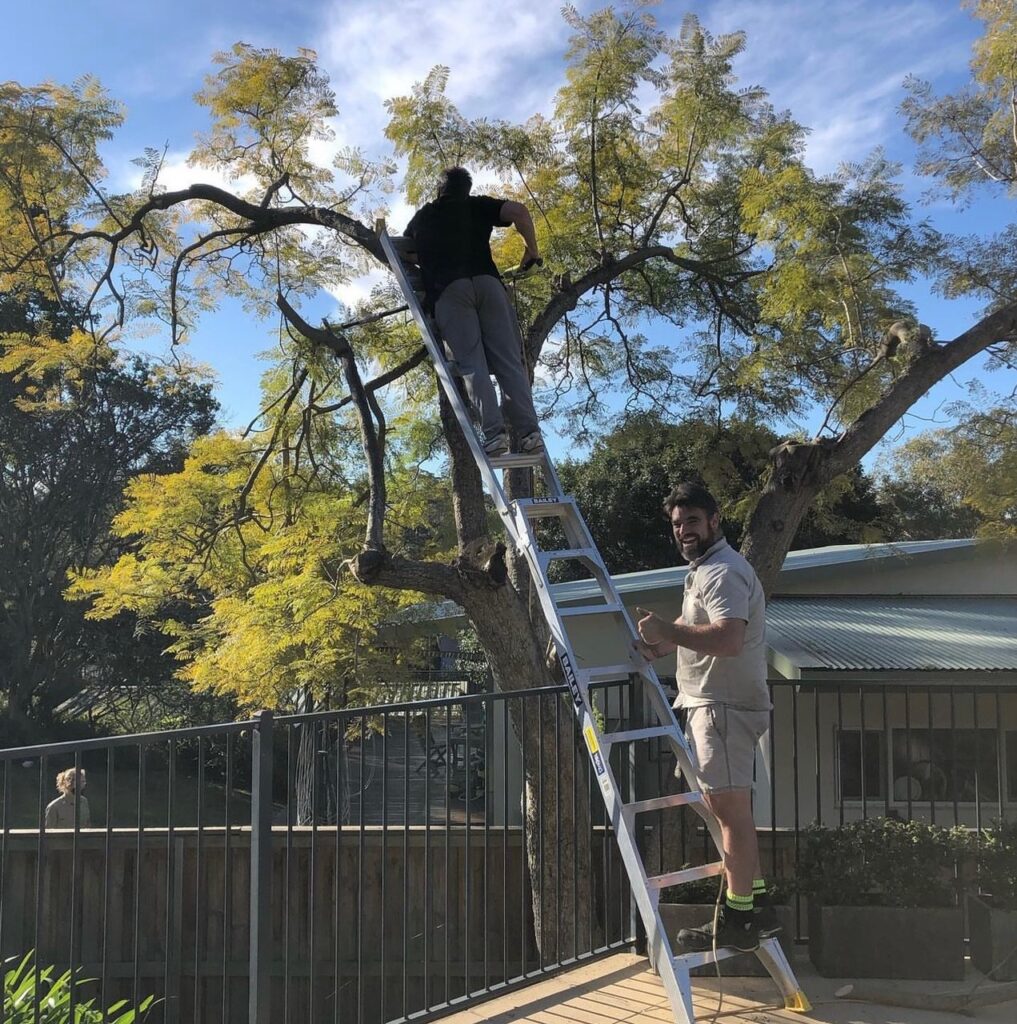
Great communication and exceptional workmanship. The team arrived on time and did an amazing job with pruning, planting, and lawn care.
The weeding experts
Weeding Services Sydney
Most weeds come back because of what was left in the ground, not because of what was pulled out. Getting rid of them properly means knowing which kind you are dealing with — taproot, runner, bulb, seed bank or woody sucker — because each one defeats a different approach.
Rated 5 out of 5 by our customers
- Garden beds, lawns, paths and fence lines
- Invasive and bushland weeds removed properly
- Everything taken away, not left in a pile
- Open 7 days, 7am–6:30pm
Request a weeding quote
Suburb and how far it has got away. We'll come back today.
Google reviews
What customers say about our weeding
Real reviews from our Google Business Profile, word for word.
I'm very happy with Lachlan and his team at Sydney Gardeners. They did a professional, clean and well-rounded job. I would highly recommend their work.
Great service, friendly staff, my garden looks amazing.
Great job on my garden
Greatest gardening service ever, couldn't be happier.
The guys at Sydney gardeners serviced my gardens with a professional manner, it's rare to find a quality gardening service in Sydney that is this good now-days.
Weeding is the job people put off, and it is the one where putting it off costs the most. A bed weeded in September takes twenty minutes. The same bed left until December takes two hours, and by then everything in it has seeded for next year. That is the whole economics of weeding in one sentence.
It is also the job most often done in a way that guarantees a repeat. Pulling the tops off a bed makes it look immaculate for a fortnight and changes nothing underground, and a few common Sydney weeds actively multiply when you attack them the obvious way. Knowing which plant you are looking at, and what it is doing below the surface, is most of the skill.
We do everything from a one-off rescue on a bed that has got away, through regular weeding as part of a maintenance visit, to serious invasive species removal on bush-edge blocks where lantana, privet and asparagus fern have taken over. Everything we pull leaves with us — weeds tipped over the back fence are how half of Sydney's bushland weed problem started.
The cost of leaving it
What Happens if Weeds are Left in a Garden?
Weeds are easy to dismiss as an appearance problem. They are not — an unweeded garden gets measurably worse in six specific ways, and most of them are invisible until the damage is done.
-
Competition for Resources
They are simply better at it than your plants. Weeds are fast, tough and unfussy, and they take the nutrients, water, root space and light that were meant for everything else. The result is not a dead garden, it is a quietly underperforming one — slower growth, fewer flowers, less fruit, and plants that struggle in the first hot week because they never built the root system to cope.
-
Allelopathic Effects
Some of them poison the ground. A number of weed species release chemicals into the soil that suppress germination and growth in nearby plants — allelopathy. It is why some beds stay stubbornly poor even after the weeds are gone, and why the fix in those cases is soil work and organic matter rather than another round of fertiliser.
-
Aesthetic Disruptions
It reads as neglect, fast. Nothing makes a garden look unmaintained more quickly than weeds through the beds and along the paths — not long grass, not tired planting. On a commercial frontage or a property being presented for sale it is the first thing a visitor registers, and the cheapest thing to fix.
-
Harbouring Pests and Diseases
A weedy bed is a reservoir. Weeds host aphids, mites, whitefly and fungal disease between seasons, so your plants get reinfected from a metre away every year. Clearing weeds around vegetable beds and roses is often more effective at reducing pest pressure than anything you would spray.
-
Physical Structure Interference
Roots find every crack. Weeds get into paving joints, retaining wall gaps, driveway edges and drainage lines, and woody ones widen what they get into. Left long enough, this stops being a garden problem and becomes a repair bill — lifted pavers, blocked agi lines and split mortar.
-
Impact on Biodiversity
It does not stop at your fence. In Sydney's bush-edge suburbs, garden weeds escape into reserves and national park, displacing native plants and the birds and animals that depend on them. Lantana, privet, asparagus fern, madeira vine and morning glory all got into the bush from gardens. Keeping them out of yours is genuinely part of the job.
The most useful thing on this page
Why it came back: five kinds of weed, five different fixes
Nearly every failed weeding job comes down to the same mistake — treating all weeds the same way. What a weed does below ground decides what works on it, and two of these get actively worse if you pull them.
Know the serious ones
Six weeds worth calling somebody about
These are the ones that stop being a weekend job. Every one of them escaped from a Sydney garden into the bush, most are declared weeds somewhere in the state, and all of them get harder and more expensive the longer they are left.
LantanaDeclared weed · woody
Sprawling thickets with rough, strongly scented leaves and clusters of small orange, pink and yellow flowers. It forms impenetrable stands that shade out everything beneath and is toxic to stock.
The fix: cut and treat the stumps rather than pulling — broken stems layer and re-root where they touch the ground. Large stands come out in stages, and the ground gets replanted or mulched so it does not simply come back.
Never just slash it and leave itPrivetSmall & broad leaf · woody
Fast, shade-tolerant shrubs and small trees with dark green leaves, heavily scented cream flowers in spring and purple-black berries that birds spread everywhere. The flowering is a genuine allergy problem for a lot of people.
The fix: small seedlings pull out whole. Anything with a real trunk gets cut and the stump treated immediately, because a cut privet suckers hard. Getting the berries off before they ripen stops the next generation appearing all over the neighbourhood.
Deal with it before it fruitsAsparagus fernDeclared weed · tubers
Fine, feathery foliage that looks harmless in a pot and forms dense mats in a garden bed, with red berries birds carry into the bush. Underneath is a solid mass of white tubers.
The fix: the foliage means nothing — the tubers are the plant. It has to be dug out, crown and tubers together, and any fragment left will restart it. On steep or large infestations it is staged work, and the material goes into bags rather than a green bin.
Dig the tubers or do not botherMadeira vineDeclared weed · aerial tubers
A heavy climbing vine with fleshy heart-shaped leaves that smothers and collapses whole trees under its own weight. Warty potato-like tubers hang along the stems and drop off at a touch.
The fix: the worst of them to rush. Every dropped tuber becomes a new vine, so the work is careful removal into bags, treatment of the ground tubers, and repeat visits over a year or more. Pulling a vine down and letting the tubers scatter is how a small problem becomes a large one.
Slow, staged, and bagged — not pulledTradWandering jew · runners
Glossy succulent stems forming a dense mat in shade and damp, especially on the north shore and in gully blocks. It also causes a genuine contact allergy in dogs, which is often how people discover they have it.
The fix: every snapped piece re-roots, so it gets rolled up and removed rather than raked or hoed. The ground then needs smothering or replanting quickly, because bare damp shade is exactly what it recolonises. Expect follow-up visits rather than one heroic clear-out.
Roll it up, never chop it upMorning glorySmothering vine · runners
Vigorous twining vine with heart-shaped leaves and blue-purple trumpet flowers, capable of covering a fence, a shed and a mature tree in a single season. Underneath it, everything is slowly being shaded to death.
The fix: it regrows from root fragments and from any stem section left in contact with soil, so the roots have to come out and the ground has to be watched. Cutting the vine off a tree first, then dealing with the base, saves damaging whatever it has grown through.
Free the tree first, then the roots
Where the green waste goes matters
Weeds tipped over the back fence or dumped in a reserve are how most of these got into Sydney's bushland to begin with, and seed and tubers survive a long time in a heap. Anything we remove leaves with us and goes to proper green waste processing. For the tuber-forming species — asparagus fern, madeira vine, oxalis — the material is bagged rather than loose-loaded, because a tuber that falls off the ute in your driveway starts again there.
More Google reviews
Sydney homes and businesses we've looked after
Unedited reviews straight from Google — the same crews, the same standard.
Been getting great service and value from Sydney gardeners now for a number of years, always great high quality work in my feature gardens. Attention to detail is second to none. No job to big for these boys to tackle.
Can't thank Lachlan and the rest of the team enough for the professionalism and outstanding service I have received. I have been using their services for the past 18 months and I am always impressed with the results of their work. Highly recommended.
Thank you so much. You guys did a great job. I will be a continuing customer.
Very happy with the job Lachlan did mowing and pruning at our home. He was very pleasant to deal with and did a great job with prompt service. Thank you
Absolutely thrilled with the work from Sydney Gardeners! The team transformed our overgrown backyard into a beautiful, low-maintenance garden. They were professional, punctual, and paid attention to every detail. Highly recommend their services!
I highly recommend Lachlan and the team at Sydney Gardeners. Not only do they do great work, but more importantly they are reliable! Lachlan was also more than happy to help me out when I needed an extra service squeezed in just before Xmas.
Lachlan and his team have been looking after my Strata Property for over 2 years now. He is diligent with his timekeeping, punctual, provides attention to detail and does not hesitate to go above and beyond to provide satisfaction to our strata residents and property management team.
Sydney Gardeners provide exceptional services. Their team is professional, efficient, and knowledgeable. They transformed my garden beautifully, exceeding my expectations. Highly recommended for all gardening needs!
My first time using Lachlan from Sydney Gardeners. I had overgrown high hedges to be significantly cut back and I was impressed with the finished job. I will be using them again and recommend him for all your gardening needs.
I highly recommend Sydney Gardeners to anyone seeking professional garden design and maintenance services. Their commitment to excellence, creativity, and client satisfaction is unparalleled, and I am thrilled with the beautiful garden they've created for me. Thank you, Sydney Gardeners, for turning my garden dreams into reality!
Sydney Gardeners helped us clean up our backyard after months of neglect. The team was punctual, friendly, and worked efficiently. Our lawn and hedges now look fantastic. Would happily use them again.
Lachlan did a great job mowing my lawn!
Lachlan and his men have been doing my garden for some years. My hedges and trees are beautifully trimmed every time. I share the same experience with the majority, those with excellent reviews.
Lachlan and his team were fantastic. They were professional and did the job in a timely manner. He gave me some great insights on how we could develop our business garden.
Lachlan provided high quality gardening services including trimming of trees on our property in Mosman. We were very happy with the excellent communication, efficiency and professionalism. We would be happy to recommend Lachlan to friends and family.
Highly recommend. They took over from long-time gardeners for our apartment building and Sydney Gardners standard is far greater and less expensive.
Great quality work and professional service. Was very happy with the job that was done! Will definitely be using these guys again 😊
Lachlan did a great job mowing and edging the property. Only just starting using them. Very happy
Great gardener with a very strong work ethic and excellent attention to detail. Well priced and timely.
Lachlan is very professional and hard working. Highly highly recommend.
Professional and polite. They did exactly what I wanted. Highly recommend.
Amazing service, highly recommend!
Prompt and excellent service
My usual gardener wasn't available to me so I decided to go with the guys at Sydney Gardeners. I was surprised with how quickly they managed to do the job (I have a large backyard with hedges).
Incredible service, excellent communication skills and a pleasure to work with! Would definitely recommend to anyone looking to maintain or brighten up their garden! Thank you
These boys did a great job, very responsive, very professional.
Great service, extremely timely and professional. Thanks!
Would highly recommend to anyone looking for any gardening maintenance needs
Excellent service and quick, helpful responses.
Sydney Gardeners were amazing at working on my lawn and the rest of my backyard. They were very friendly and enthusiastic to complete the job.
Super helpful!!
The toolkit
Four ways a weed comes out, and when each is right
There is no single correct method, which is the whole reason a blanket approach fails. Most real jobs use two or three of these together, chosen by species, position and what is growing next to it.
-
Hand removal
- Best for
- Taprooted and seedling weeds, anything among desirable planting, vegetable beds and around children and pets.
- Timing
- After rain or a deep watering, while the soil releases the root cleanly.
The catch: slow, and useless on bulbs and runners unless every piece comes out.
-
Smothering
- Best for
- Whole beds being reset, large areas of runner weeds, and preventing the seed bank from ever germinating.
- Timing
- Straight after clearing — weed mat or thick cardboard, then 75 mm of coarse mulch over it.
The catch: takes months to kill established runners, and it has to be unbroken to work.
-
Cut and treat
- Best for
- Woody and suckering weeds — privet, lantana, blackberry, camphor laurel and tree-of-heaven.
- Timing
- The stump gets treated within seconds of the cut, while it is still drawing.
The catch: miss the window and the stump seals over, then suckers back thicker.
-
Targeted spot treatment
- Best for
- Bulb and tuber weeds like oxalis and nutgrass, and lawn weeds where digging would wreck the turf.
- Timing
- Growing weather, on a still day, applied to the plant rather than sprayed across a bed.
The catch: needs the right product for the species, and usually more than one application.
Prevention beats all four of them
The cheapest weeding is the weeding you do not do. A bed that is cleared properly, mulched to 75 mm and kept planted densely enough to shade its own soil will need a fraction of the attention of a bare bed, because weed seed needs light to germinate and there is none reaching the ground. Most of what we do on a maintenance visit is keeping beds in that state rather than fighting them back into it.
How the job runs
Sydney Gardeners’ Weeding Service Process
Whether it is a single overgrown bed or a bush-edge block with three declared weeds in it, the job runs the same way — identify first, then plan, then clear, then make sure it stays cleared.
-
Initial Consultation
A free site visit where we walk the garden with you, look at what is actually growing, and find out what you want from it — a one-off rescue, an ongoing schedule, or a specific problem area you have given up on.
-
Comprehensive Weed Assessment
Identifying what is there and, more importantly, which of the five root strategies each one uses. That is what determines whether a bed can be hand-cleared in an afternoon or needs staged work across a season.
-
Tailored Weeding Strategy
A plan matched to the species and the position: what comes out by hand, what gets cut and treated, what needs smothering, and what has to be worked on more than once. Including what we will not do, and why.
-
Execution of Weeding
The clearing itself, with roots, tubers and runners removed rather than tops taken off, and everything bagged or loaded rather than left in a heap. Desirable planting gets worked around carefully, not sprayed past.
-
Soil Nourishment and Plant Care
The part most people skip. Cleared soil is bare soil, and bare soil grows weeds. Compost or soil improver where it is needed, then mulch to 75 mm, which is what actually stops the seed bank restarting.
-
Ongoing Maintenance and Support
A follow-up on anything that needed repeat treatment, and a schedule if you want one. Twenty minutes of weeding on a regular visit is the difference between a garden that stays clear and one that has to be rescued annually.
Why us
Why Choose Sydney Gardeners for Weeding Services in Sydney?
Weeding sounds like the least skilled job in gardening and is quietly one of the most knowledge-dependent, because getting it wrong makes the problem bigger rather than smaller.
-
Expertise and Knowledge
Twenty years of working across Sydney means we know what we are looking at — including the ones people mistake for each other, like oxalis and clover, or a privet seedling and a native. Knowing which is which decides the method, and the method decides whether it comes back.
-
Technology Integration
Nothing gimmicky: the right tools for each job. Long-handled levers that lift a taproot whole, battery gear that lets us work early near houses and childcare, targeted application equipment instead of blanket spraying, and heavy-duty weed mat under mulch on the beds that keep coming back.
-
Safe and Eco-friendly Approaches
Mechanical removal wherever it will work, so most gardens need no chemical at all. Where a targeted treatment genuinely is the only thing that beats a tuber weed, it goes on the plant rather than across the bed, on a still day, with the area managed afterwards. We will tell you exactly what is being used and why.
-
Client Engagement
You get told what we found, what we did and what is going to need another visit — particularly on the staged jobs, where honest expectations matter more than a confident promise. If a bed needs three visits over a year to actually beat what is in it, we say that at the quote.
Mulching
The step that keeps a cleared bed clear — 75 mm of coarse mulch over weed mat where it is needed.
Garden maintenance
Regular visits where weeding is twenty minutes of upkeep instead of a full day of rescue.
Spring gardening guide
The six lawn and bed weeds a Sydney spring throws at you, and how to handle each yourself.
75mm
Mulch depth that stops seed germinating
7
Days a week, 7am–6:30pm
$0
Site visit & written quote, always
Questions
Weeding questions
Why do my weeds always come back?
Almost always because of what stayed in the ground. A taproot snapped off at the crown regrows within a fortnight, a runner weed regrows from every fragment left behind, and bulb weeds like oxalis and nutgrass actually multiply when you pull them because the bulbils detach and stay put. Add a seed bank of thousands of seeds sitting in the top few centimetres waiting for light, and a bed pulled by hand and left bare is more or less guaranteed to return.
Do you use chemicals, and can you avoid them?
Most gardens we weed need no chemical at all — mechanical removal and mulching handle it. Where a targeted treatment is genuinely the only thing that beats a tuber weed like nutgrass, or a suckering woody weed like privet, it is applied to the plant itself rather than sprayed across a bed, on a still day, and we tell you what is being used beforehand. If you would prefer a completely chemical-free approach we will say honestly which weeds that rules out beating quickly.
Is it safe around pets, children and vegetable beds?
Yes, and it changes how we work. Around vegetable beds, play areas and where pets have the run of the yard, we default to mechanical removal and mulch. Where anything is applied at all we discuss it first, apply it in a targeted way and give you clear re-entry advice. Trad, incidentally, is worth removing for dogs specifically — it causes a contact allergy in a lot of them.
How much does weeding cost in Sydney?
It is quoted per job rather than per square metre, because two beds of the same size can be an hour apart in work depending on what is growing and how long it has been left. As a rough guide, a general tidy-up sits in the $160–$300 range, ongoing weeding folded into a regular maintenance visit costs very little because it never builds up, and staged invasive species removal on a bush block is quoted after a site visit. The free visit is the honest way to price it.
Is it cheaper to have it done regularly or all at once?
Regularly, by a wide margin. Weeding is the clearest example of maintenance being cheaper than rescue: twenty minutes on a fortnightly visit keeps a garden permanently clear, while the same garden left for a season becomes a full day's work and everything in it has seeded for next year. The rescue visit also costs more per hour, because it is harder work.
What is the best time of year to deal with weeds?
Late winter and early spring, before anything flowers. A weed pulled in August never sets seed in October, which is the whole game — one plant left to flower reseeds a bed for years. Bindii is the classic case: treat it in June or July while it is a soft rosette, because by the time you can feel the prickles in spring the seed has already set. Soil is also softest after winter rain, so roots come out whole.
Can you get rid of oxalis and nutgrass for good?
Eventually, with patience, and anyone promising a one-visit fix is not being straight with you. Both grow from underground bulbs or nuts that stay behind when the plant is pulled, so the approach is targeted treatment repeated over seasons while never letting the leaves build up energy for the next generation. Deep mulch and dense planting help by depriving them of light. It is a campaign, not a job.
Do you remove lantana, privet and other declared weeds?
Yes, and it is a good part of what we do on bush-edge blocks. Woody invasives get cut and the stumps treated immediately, because cutting alone makes them sucker back thicker. Larger infestations come out in stages so the site is never left completely bare, and the ground gets mulched or replanted so the same weeds do not simply recolonise it. All material leaves the site.
What do you do with the weeds you remove?
They go with us to proper green waste processing. Nothing is left in a pile behind the shed or tipped over the back fence, which is how most of Sydney's bushland weeds got into the bush in the first place. For tuber-forming species like asparagus fern and madeira vine the material is bagged rather than loose-loaded, because a single dropped tuber starts a new infestation wherever it lands.
Will weed mat solve the problem permanently?
It helps a lot and it is not permanent. Under 75 mm of mulch, quality weed mat blocks the light the seed bank needs and makes a real difference for years, and we use it on larger commercial beds especially. What it will not do is stop weeds germinating in the mulch layer on top of it once that layer breaks down, and determined runner weeds will eventually find an edge. Treat it as a very good head start rather than a permanent solution.
Can you weed lawns without damaging the grass?
Yes. Lawn weeds are handled differently to bed weeds, because digging them out leaves holes that fill with more weeds. Broadleaf weeds in turf are best treated selectively, bindii in winter before the prickles form, and the most underrated fix of all is feeding the lawn properly — clover and winter grass both move in where turf is thin and hungry, and a thick lawn crowds them out on its own.
Which areas of Sydney do you cover?
All of them — the North Shore, Northern Beaches, Eastern Suburbs, Inner West, CBD, Western Sydney, the Hills District and Southern Sydney. Invasive weed work is most common on the bush-edge blocks around Ku-ring-gai, Hornsby, the northern beaches and the Sutherland Shire, where gardens back straight onto reserve.

Who you are dealing with
Twenty years of pulling things out properly
Sydney Gardeners is family operated and has been running for over twenty years, with eight-plus utes on the road and one training standard across all of them. Weeding is the job that separates a gardener from someone with a mower — anyone can make a bed look clear for a fortnight, and the difference shows up three months later.
If our customers aren't happy, we aren't happy.
Lachlan Kavanagh
Operator of Sydney Gardeners
Same day quotes
Don’t let weeds take over your garden
Free site visit, an honest assessment of what is actually growing, and a written quote that says how many visits it will really take. Across Sydney, seven days a week.