
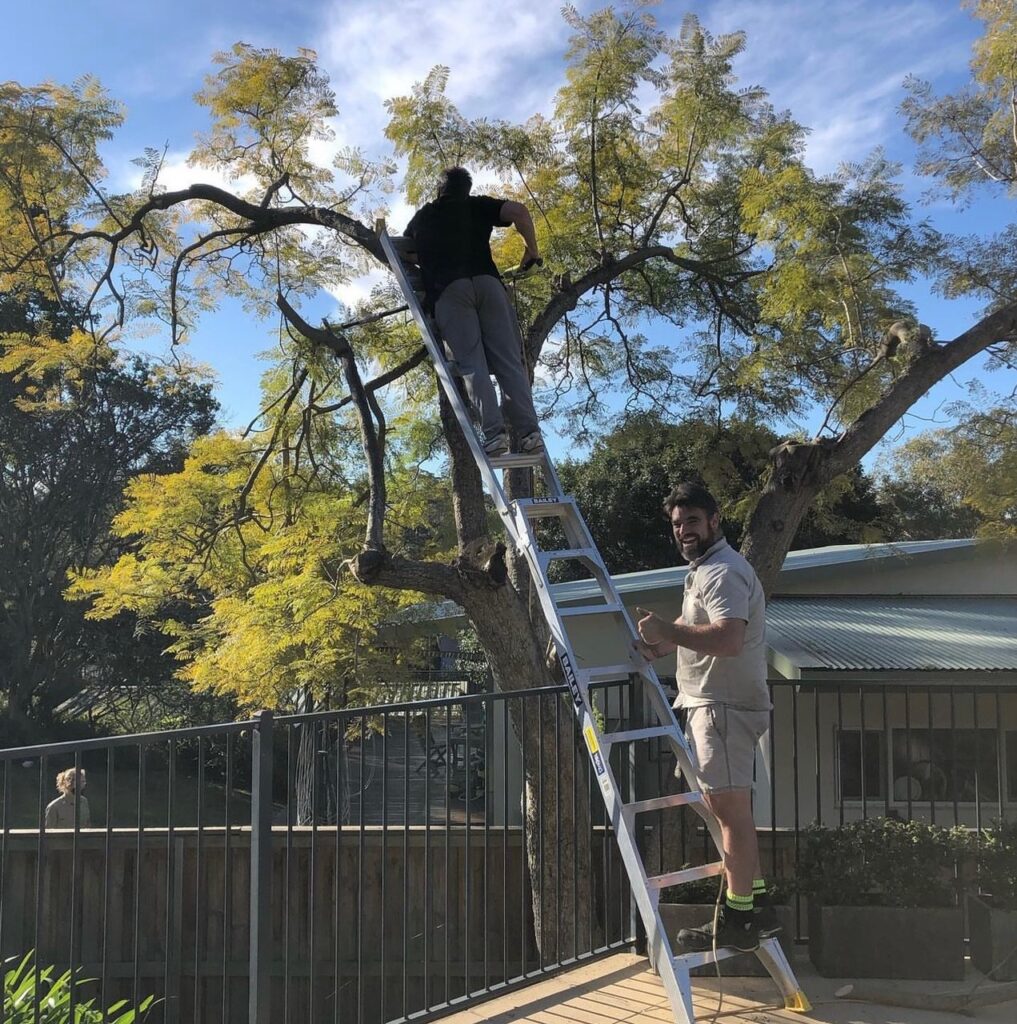
Lachlan did a great job mowing my lawn!
The experts in grass slashing
Grass Slashing Services Sydney
Paddock grass, neglected blocks and yards a metre deep — knocked down safely and staged back to something you can mow. Hazards checked before a blade turns.
Rated 5 out of 5 by our customers
- Suburban blocks through to acreage
- Fire-hazard and council notice work at short notice
- Site walked for hazards before we start
- Open 7 days, 7am–6:30pm
Request a slashing quote
Suburb, rough size of the area, and how deep it is. A photo taken from the fence line tells us most of it.
Google reviews
What customers say about our grass slashing
Real reviews from our Google Business Profile, word for word.
Lachlan did a great job mowing and edging the property. Only just starting using them. Very happy
Very happy with the job Lachlan did mowing and pruning at our home. He was very pleasant to deal with and did a great job with prompt service. Thank you
Sydney Gardeners were amazing at working on my lawn and the rest of my backyard. They were very friendly and enthusiastic to complete the job.
My usual gardener wasn't available to me so I decided to go with the guys at Sydney Gardeners. I was surprised with how quickly they managed to do the job (I have a large backyard with hedges).
Absolutely thrilled with the work from Sydney Gardeners! The team transformed our overgrown backyard into a beautiful, low-maintenance garden. They were professional, punctual, and paid attention to every detail. Highly recommend their services!
Grass gets away from people faster than almost anything else in a Sydney garden. A wet fortnight in October, a holiday, a tenant who moved out early, and what was a lawn is now a paddock. Past a certain height it stops being a mowing job entirely — a domestic mower will bog down, stall, throw a belt or simply ride over the top of it, and pushing on regardless is how people wreck a machine or hit something hidden.
Slashing is the tool for that. It is a knock-down cut with heavy gear built for rank growth and rough ground, designed to get a metre of grass down to something manageable in one pass without pretending the result is a lawn. It leaves a coarse finish, and on most jobs the cut material stays on the ground to break down. Then, if you want a lawn back, it is staged down over a few weeks rather than scalped in a day.
We slash neglected suburban backyards, vacant blocks, acreage, easements and commercial verges, and we do a lot of short-notice work for people who have had a letter from council or are trying to get a fire hazard sorted before summer. Every job starts by walking the site, because the whole risk in this work is what you cannot see.
The difference
Slashing is not mowing, and it is not meant to be
People are sometimes disappointed by a slashed finish because they were picturing a mown one. They are different jobs with different machines and different goals.
Slashing
- For rank, overgrown or long-neglected growth — typically knee height and well beyond
- Heavy gear: tractor-mounted slasher, flail, or commercial brushcutters on the tight parts
- Cuts high, roughly 75 to 150 mm, because the aim is knock-down rather than finish
- Handles rough, uneven and sloping ground, and copes with a hidden rock or stick without destroying itself
- Material is usually left to break down on site unless you want it removed
- Finish is coarse and uneven, and that is normal
Mowing
- For maintained turf that is already at a sensible height
- Domestic or commercial mowers, ride-ons and zero-turns on prepared ground
- Cuts to a set height for the grass type — buffalo 40–50 mm, kikuyu 25–40 mm, couch 15–30 mm
- Needs even ground and no hidden obstacles; a star picket ends the machine
- Clippings mulched back or taken away, edges cut, the whole thing blown down
- Finish is the point — see lawn mowing
The usual sequence for a block that has got away is: slash it now, let it sit for a fortnight, then bring it down in stages until an ordinary mower can take over. Plenty of clients then move onto a regular mowing or acreage schedule so it never gets back to this point — which is always cheaper than repeat rescues.
Sizing the job
How long is too long for a mower?
The honest answer is about ankle-to-shin height for a domestic mower, and it drops fast once the grass is thick or damp. Here is what actually cuts what.
Why it matters
Issues Faced With Overgrown Grass
Long grass is not only untidy. Most of what it costs you happens out of sight.
-
Aesthetic Decline
It reads as neglect, and it spreads. A block that looks abandoned attracts dumping, and it is the first thing a buyer, a tenant, a valuer or a neighbour notices. On a property going to market it costs more in perceived condition than the slashing would have.
-
Habitat for Pests
Rats, ticks and, on bush-edge blocks, snakes. Dense long grass gives rodents cover to move around and gives ticks somewhere to wait, which matters if you have a dog. Around the Hills, Hornsby, Sutherland and the north-west, brown and red-bellied black snakes genuinely do use long grass.
-
Reduced Usability
You stop going out there. Once a yard is knee-deep it is out of use for kids, dogs and anything else, and the longer it stays that way the more it becomes a rubbish and clutter zone rather than a garden. Reclaiming it is almost always faster than people expect.
-
Safety Concerns
Everything is hidden. Star pickets, old fence wire, stumps, holes, sprinkler heads and dumped rubbish all disappear under long grass, and any of them can hurt someone or wreck a machine. This is why we walk a site before we cut rather than after.
-
Health of Plants
Rank grass outcompetes everything. It takes the water and nutrients from young shrubs and hedges, smothers ground covers, and holds damp against trunks and stems. Worse, at this height it will have set seed — so next season is a bigger job than this one.
-
Regulatory Issues
Councils and the RFS can and do act. Local councils and the Rural Fire Service have powers to require property owners to reduce fuel and overgrown vegetation, usually by written notice with a deadline attached, and they can escalate if it is ignored. If you have received one, bring it to the quote — the wording tells us exactly what has to be done.
More Google reviews
Sydney homes and businesses we've looked after
Unedited reviews straight from Google — the same crews, the same standard.
Great service, extremely timely and professional. Thanks!
Been getting great service and value from Sydney gardeners now for a number of years, always great high quality work in my feature gardens. Attention to detail is second to none. No job to big for these boys to tackle.
These boys did a great job, very responsive, very professional.
Great communication and exceptional workmanship. The team arrived on time and did an amazing job with pruning, planting, and lawn care.
I highly recommend Lachlan and the team at Sydney Gardeners. Not only do they do great work, but more importantly they are reliable! Lachlan was also more than happy to help me out when I needed an extra service squeezed in just before Xmas.
Lachlan and his team have been looking after my Strata Property for over 2 years now. He is diligent with his timekeeping, punctual, provides attention to detail and does not hesitate to go above and beyond to provide satisfaction to our strata residents and property management team.
I'm very happy with Lachlan and his team at Sydney Gardeners. They did a professional, clean and well-rounded job. I would highly recommend their work.
Can't thank Lachlan and the rest of the team enough for the professionalism and outstanding service I have received. I have been using their services for the past 18 months and I am always impressed with the results of their work. Highly recommended.
Sydney Gardeners provide exceptional services. Their team is professional, efficient, and knowledgeable. They transformed my garden beautifully, exceeding my expectations. Highly recommended for all gardening needs!
My first time using Lachlan from Sydney Gardeners. I had overgrown high hedges to be significantly cut back and I was impressed with the finished job. I will be using them again and recommend him for all your gardening needs.
I highly recommend Sydney Gardeners to anyone seeking professional garden design and maintenance services. Their commitment to excellence, creativity, and client satisfaction is unparalleled, and I am thrilled with the beautiful garden they've created for me. Thank you, Sydney Gardeners, for turning my garden dreams into reality!
Sydney Gardeners helped us clean up our backyard after months of neglect. The team was punctual, friendly, and worked efficiently. Our lawn and hedges now look fantastic. Would happily use them again.
Greatest gardening service ever, couldn't be happier.
Great job on my garden
Lachlan and his men have been doing my garden for some years. My hedges and trees are beautifully trimmed every time. I share the same experience with the majority, those with excellent reviews.
Lachlan and his team were fantastic. They were professional and did the job in a timely manner. He gave me some great insights on how we could develop our business garden.
Lachlan provided high quality gardening services including trimming of trees on our property in Mosman. We were very happy with the excellent communication, efficiency and professionalism. We would be happy to recommend Lachlan to friends and family.
Highly recommend. They took over from long-time gardeners for our apartment building and Sydney Gardners standard is far greater and less expensive.
Great quality work and professional service. Was very happy with the job that was done! Will definitely be using these guys again 😊
Great gardener with a very strong work ethic and excellent attention to detail. Well priced and timely.
Lachlan is very professional and hard working. Highly highly recommend.
Great service, friendly staff, my garden looks amazing.
Thank you so much. You guys did a great job. I will be a continuing customer.
Professional and polite. They did exactly what I wanted. Highly recommend.
Amazing service, highly recommend!
Prompt and excellent service
Incredible service, excellent communication skills and a pleasure to work with! Would definitely recommend to anyone looking to maintain or brighten up their garden! Thank you
Would highly recommend to anyone looking for any gardening maintenance needs
Excellent service and quick, helpful responses.
The guys at Sydney gardeners serviced my gardens with a professional manner, it's rare to find a quality gardening service in Sydney that is this good now-days.
Super helpful!!
Reclaiming it
Getting a metre of grass back to a lawn
The temptation is to take it straight down to mowing height on day one. That scalps whatever lawn is underneath, leaves a mat of dead material that smothers the regrowth, and gives you bare dirt and weeds in six weeks.
Two things change that timetable. In the cooler months everything slows down, so the gaps stretch out and the whole reclaim takes longer — there is no point cutting grass that is not growing. And if there is no lawn worth saving underneath — just weeds, kikuyu runners and bare patches — then the staging matters far less and the honest conversation is about seeding or turfing once it is knocked down. We will tell you which of those two situations you are in after the first pass, when we can actually see the ground.
Before a blade turns
What is actually in there
Slashing is the one gardening job where the main risk is invisible. A slasher throws whatever it hits, and it hits things at speed.
-
Steel
Star pickets, old fence wire, reo bar, tent pegs and the remains of a clothesline. Wire is the worst of them: it wraps a shaft, and a picket hit at speed becomes a projectile. On blocks that have had any fencing history we walk it with a marker and flag anything solid before we start.
-
Rock and stumps
Sandstone comes to the surface across most of Sydney, and a shelf sitting 50 mm proud is invisible under long grass. Stumps, tree roots and old garden edging do the same. These are what set the cutting height for the first pass — we cut high, then lower it once we can see the ground.
-
Services and irrigation
Sprinkler heads, valve boxes, ag line outlets, septic lids, pump covers and telecom pits all live at ground level and all get destroyed by a slasher. If you know where they are, mark them; if you do not, tell us what is likely to be there and we will find them the careful way.
-
Rubbish and wildlife
Bottles, cans, builders' offcuts and dumped material get shredded and thrown. There is also usually something living in there — blue-tongues, echidnas on bush-edge blocks, nesting birds in spring, and occasionally a snake. We walk it first and cut from the middle outwards so anything in there can leave.
If you are doing it yourself, do this bit anyway
Walk the whole area first, slowly, with a rake or a stick, and put a marker beside anything solid. Wear boots, eye protection and long sleeves — a brushcutter throws grit and glass. Do not slash on a hot, dry, windy day: a blade hitting rock throws sparks, and long dry grass is exactly the fuel that turns that into a fire. And do not let kids or dogs into the area until it is cut and you have seen what came out of it.
Fuel and compliance
Long grass as bushfire fuel
Grass fire moves faster than almost anyone expects, and it is the fuel type most likely to carry a fire from a paddock or a reserve to a building. Breaking up that fuel is most of what a hazard reduction notice is asking for.
If a notice has arrived, read what it actually asks for before quoting anyone. They usually specify an area, a maximum vegetation height and a date, and that wording is what we work to. We do a steady stream of this work through late winter and spring across the bush-edge suburbs — Hornsby, Ku-ring-gai, the Hills, the northern beaches, the Sutherland Shire and the western fringe — and it is usually paired with clearing the gutters and the litter and clutter around the house in the same visit.
How we work
Our Process for Grass Slashing Services in Sydney
Six stages, and the first one is the one that keeps everybody safe.
-
Initial Site Inspection
We walk the whole area before quoting: how deep it is, what the grass actually is, how the ground lies, where it gets wet, what the access is like for a machine, and what is hidden in there. Anything solid gets marked. This is also where we find out whether there is a lawn worth saving underneath.
-
Customised Slashing Plan
Machine chosen for the block rather than the other way around — brushcutters on the tight and steep parts, a ride-on or slasher on the open ground, staged passes where it is too deep for one cut. We set the cutting height above the hazards we found, and plan the direction so material is thrown away from windows, cars and the pool.
-
Execution with Precision
Cut from the middle outwards where there is likely to be wildlife, high on the first pass, and slower on unknown ground. On slopes we work up and down rather than across, because a ride-on is top-heavy and a wet slope is where these machines roll.
-
Debris Management
On most jobs the cut material stays and breaks down, which returns the nutrients and costs you nothing. Where it is too thick it gets raked off, because a heavy mat smothers whatever is trying to grow back. On fire-hazard work, pre-sale jobs and anywhere it looks bad, it leaves with us.
-
Quality Assurance
A walk over the finished area: even height, nothing missed along fence lines and around obstacles, no windrows of cut grass left sitting, and hard surfaces blown down. Anything we found in there — a broken pipe, a rotten fence post, a sprinkler we could not save — gets shown to you rather than left to discover.
-
Follow-Up Services
Slashing is a rescue, not a maintenance plan. We book the staged passes at the same time if you want the lawn back, or set up a schedule — monthly through the growing season, quarterly on rougher blocks — so the next visit is a mow rather than another rescue.
Why us
Why Choose Sydney Gardeners for Your Grass Slashing Needs
Twenty-plus years, family operated, eight-plus utes and one training standard across all of them.
-
Expert Team
Crews who have done this on hundreds of blocks and know what long grass hides. The skill is not in driving the machine, it is in reading the ground before you put a blade into it and knowing when to stop and check something.
-
Advanced Equipment
The right machine for the block: commercial brushcutters for tight, steep and fence-line work, ride-ons for open ground, and slashers for genuinely rank growth and acreage. Sharp blades matter more than horsepower — a blunt blade tears grass rather than cutting it and leaves it browning off.
-
Safety First
Site walked and hazards marked, exclusion zones kept while machines are running, cutting direction planned around windows and cars, and no slashing in high fire danger conditions. We carry public liability and can provide a certificate of currency before we attend.
-
Ecological Responsibility
Cut material left to break down where it can be, so nutrients stay on site and nothing goes to landfill unnecessarily. Cutting outwards so wildlife can leave, and a bit of care around nesting season and bush-edge boundaries.
-
Responsive Customer Service
Most slashing calls are urgent — a notice with a date on it, an inspection, a sale, or a summer that has arrived early. We quote fast, we tell you plainly whether we can hit your deadline, and we do not disappear once the first pass is done.
6 wks
Typical reclaim from paddock back to lawn
7
Days a week, 7am–6:30pm
$0
Site visit and written quote, always
Questions
Grass Slashing in Sydney FAQs
What is grass slashing, and how is it different from mowing?
Slashing is a knock-down cut for rank, overgrown growth, done with heavy gear built for rough ground — a tractor-mounted slasher, a flail, or commercial brushcutters in the tight parts. It cuts high, around 75 to 150 mm, and the finish is deliberately coarse. Mowing is a finish cut on turf that is already at a sensible height, on ground that has been prepared and is free of obstacles. Trying to mow slashing work destroys mowers; trying to slash a lawn gives you a bad-looking lawn.
How long does grass have to be before it needs slashing?
Roughly knee height and above, but density and moisture matter as much as height. A domestic mower starts struggling around shin height, and wet, dense kikuyu at 300 mm is a harder cut than dry, sparse growth at half a metre. Above about a metre it is staged work with heavy gear, because nothing on the ground is visible at that point.
How much does grass slashing cost in Sydney?
It is quoted rather than published, because the drivers are things we have to see: the area, how deep it is, how rough and how steep the ground is, whether a machine can get in or it is all brushcutter work, how many hazards are in there, and whether you want the cut material removed. A neglected suburban backyard is a short job. An acre of chest-high growth on a slope with old fencing through it is not. A photo from the fence line plus the rough size gets you a same-day ballpark.
Do you take the cut grass away?
Usually it stays and breaks down, which puts the nutrients back and keeps the price down. Where it comes off too thick, we rake it off so it does not smother the regrowth. On fire-hazard work, pre-sale jobs and anywhere the mat of cut material would look bad or be a fuel load in itself, it leaves with us — just tell us up front so it is in the quote rather than a surprise.
Can you slash a block with rocks, stumps or rubbish in it?
Yes, and it is most of what we slash. That is exactly why we walk the site first and mark anything solid, and why the first pass is cut high — above the hazards rather than into them. Where a block is full of buried steel or dumped material we will tell you honestly that it needs clearing before machinery goes over it, because a slasher throws what it hits.
What sizes do you handle?
Anything from a single neglected suburban backyard up to acreage. Beyond about half an acre the work naturally becomes ride-on and slasher territory — see ride-on mowing and acreage lawn mowing for how that side of it runs. Access matters more than area: a big open paddock with a gate is easier than a small courtyard where everything is carried through the house.
Will slashing kill my lawn?
Not if it is staged. The first knock-down does not hurt anything, because at that height the grass has no useful leaf near the ground anyway. What kills lawns is going straight from a metre to mowing height in one go: it scalps the growing points, leaves a heavy mat of dead material over the top, and you end up with bare, weed-ready ground. From the second pass onwards we work to the one-third rule — never more than a third of the leaf in a single cut.
When is the best time to slash?
Late winter and early spring is the sweet spot: ahead of the growth surge, before the grass sets seed, and before the bushfire danger period, with the ground still soft enough not to rut. We avoid slashing saturated ground because machinery compacts and tears it, and we do not slash on hot, dry, windy days — a blade striking rock throws sparks, and cured grass is exactly the fuel that turns a spark into a fire.
My council sent me a notice about long grass. Can you help?
Yes, and this is a big part of our slashing work. Councils and the Rural Fire Service have powers to require property owners to reduce overgrown vegetation and fuel loads, typically by written notice with an area, a height and a deadline in it. Bring the notice to the quote — the wording tells us exactly what has to be done and by when, and we will tell you straight away whether the date is achievable.
Do you slash blocks before construction or sale?
Regularly. Vacant blocks before a build, sites before a survey or an inspection, and properties going to market where the yard is the first thing in the photos. For those we usually remove the cut material rather than leave it, because a paddock of drying windrows does not photograph any better than long grass did.
Are there really snakes in long grass?
On bush-edge and semi-rural blocks, yes — brown and red-bellied black snakes both use long grass, and they are protected, so they get left alone and given a way out rather than dealt with. It is one of the reasons we cut from the middle outwards, and the reason we tell people not to send kids or dogs in to "have a look" before it is cut.
Which areas of Sydney do you cover for slashing?
All of them, though the bulk of the slashing work is on the fringes — the Hills District, Hornsby and Ku-ring-gai, the western suburbs and the Sutherland Shire, where blocks are bigger and the bush is closer. We also do plenty of ordinary suburban backyards that have simply got away.
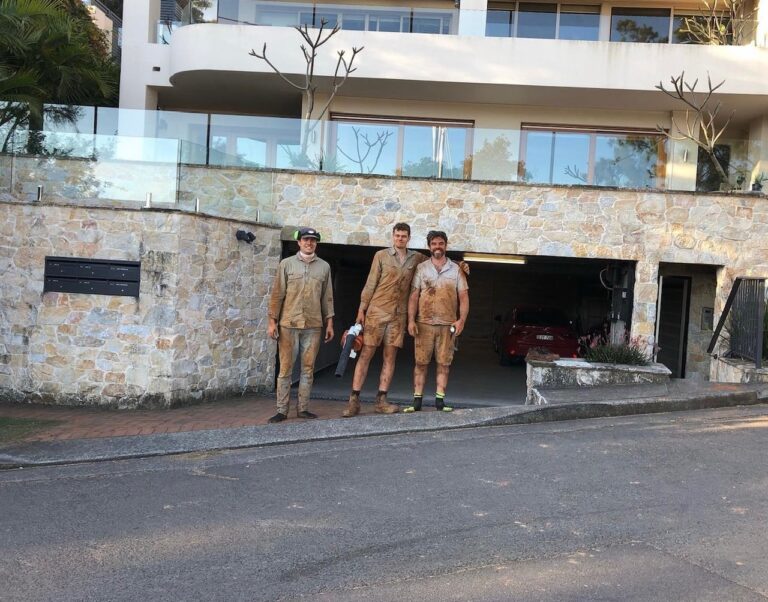
Who you are dealing with
It is never as bad as it looks from the back step
Sydney Gardeners is family operated and has been running for over twenty years, with eight-plus utes on the road and one training standard across all of them. People apologise to us about the state of their block fairly often. There is no need — grass grows, life happens, and most of what looks like a lost cause from the back door is a morning's work with the right machine.
If our customers aren't happy, we aren't happy.
Lachlan Kavanagh
Operator of Sydney Gardeners
Same day quotes
Get the block back
Send a photo from the fence line with your suburb and the rough size, and we will come back the same day. If you are working to a date on a council notice, say so in the message and we will tell you straight away whether we can hit it.